
The Institute of Statistical, Social and Economic Research (ISSER) was founded in 1962 and is a leading research institute within the College of Humanities at the University of Ghana. It produces high-quality, policy-relevant research to support national and regional development across economics, society, statistics, and public policy.
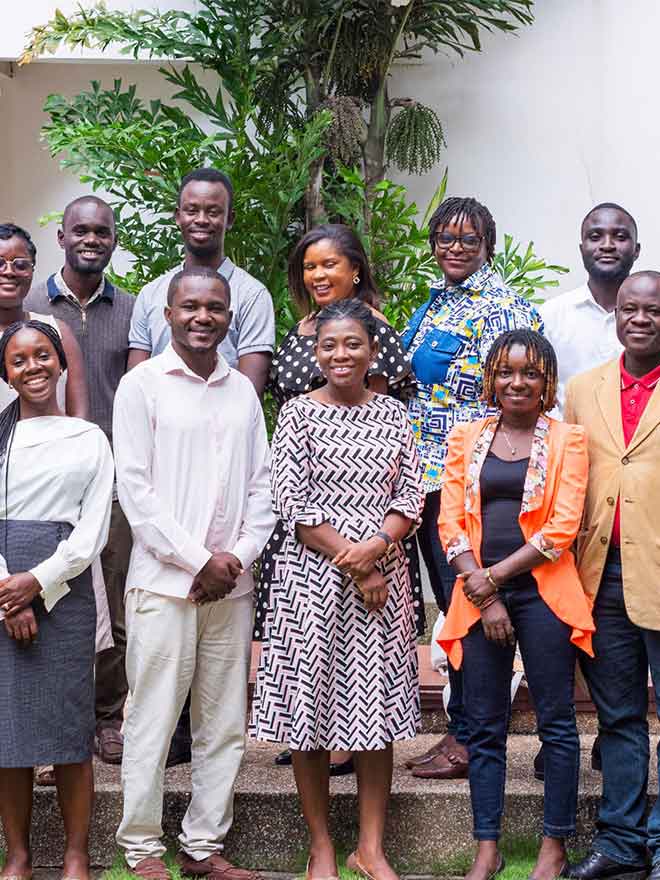
Browse Our List of Research Project
Green Jobs and Youth Employment
This project investigates opportunities for youth employment in Ghana’s emerging green economy. Employing a mixed methods approach, it identifies barriers and enablers to youth participation, aiming to inform policies that promote both youth employment and sustainable development. A
collaborative effort between ISSER and CAMFED Ghana, the project forms part of a broader consortium involving partners from Ethiopia, South Africa, Uganda, and the UK.
Researchers: Prof. Peter Quartey (Principal Investigator), Prof. Nana Akua Anyidoho and Dr. Kofi Takyi Asante
Environment for Development (EfD) GHANA
EfD Ghana is a collaborative network of environmental economists from universities in Ghana and Ghanaians elsewhere around the world working to promote the sustainable management of Ghana’s natural resources through policy-relevant research, policy advice, and capacity development. It conducts policy-relevant research on a wide range of topics, with emphasis on coastal and mineral resource management, extractive industries, energy resources management, climate change, and green growth.
Policy Prioritization through Value Chain Analysis (PPVC II)
This initiative uses a combination of tools (Computable General Equilibrium, Partial Equilibrium, Geographic Information Systems and Deep Dives) to analyse agricultural value chains to determine their potential for driving economic growth, job creation, poverty reduction, and dietary diversity.
Youth in Indigenous Enterprises in the Informal Sector
The Youth in Indigenous Enterprises in the Informal Sector project is a cross-country comparative study exploring how young people engaged in indigenous enterprises can drive inclusive economic transformation. Supported by the Mastercard Foundation, it focuses on agriculture, textiles, crafts, and cosmetics, with attention to youth entrepreneurship, indigenous business models, gender dynamics, and technological innovation.